Every year on March 22, the world pauses to recognize a resource most of us take for granted. This year, World Water Day carries a theme that speaks directly to the work we do at The WASH Foundation: the connection between water access and the health and opportunities of women and girls.
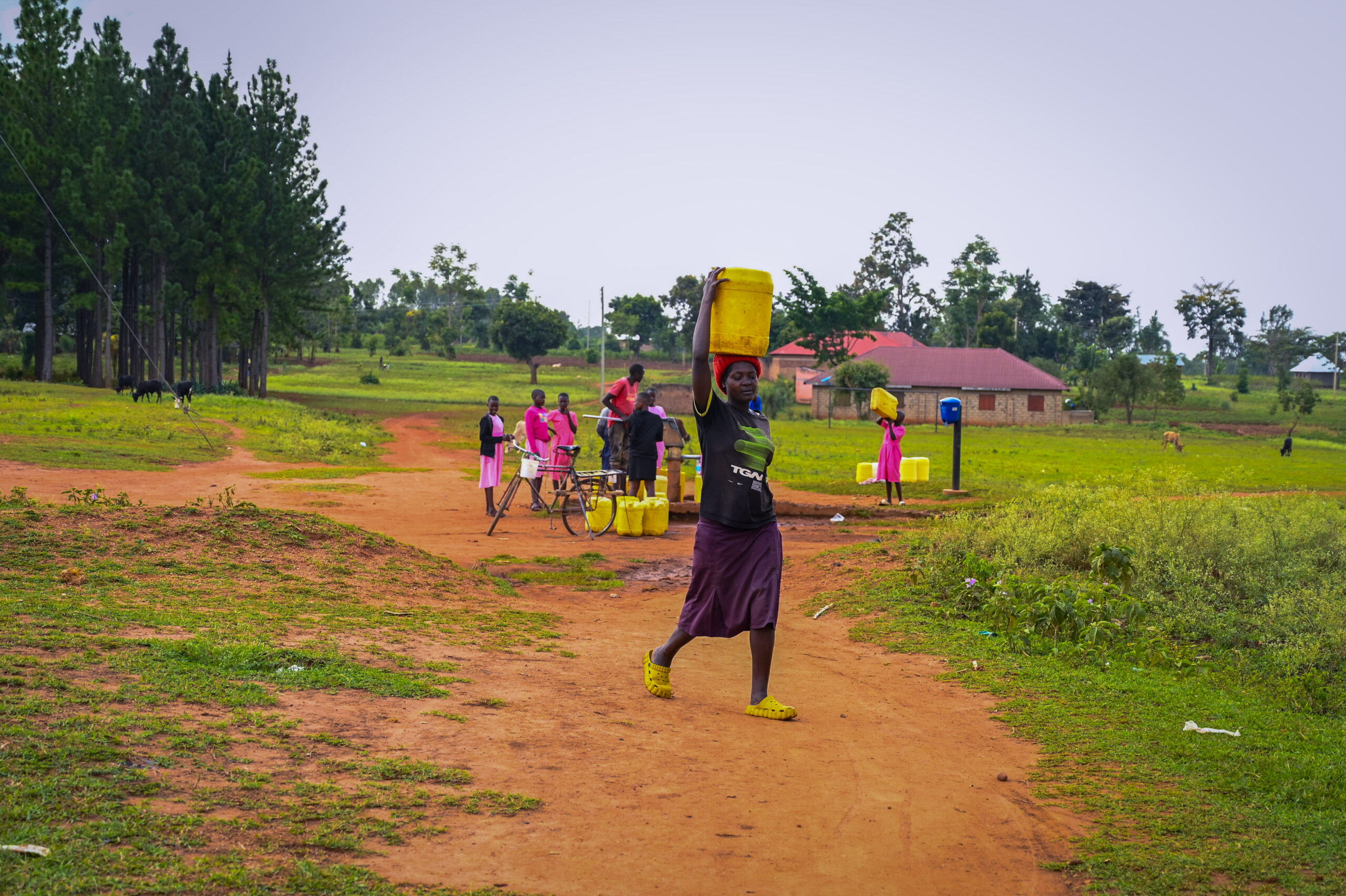
The United Nation’s 2026 campaign, titled “Where water flows, equality grows,” puts a spotlight on a truth we see every day: the global water crisis does not affect everyone equally. More than 1 billion women worldwide lack access to safely managed drinking water. Women and girls spend disproportionate time collecting water, which means less time for school, work, and community participation. When water infrastructure is absent, girls face health risks, safety concerns, and barriers to education that boys often do not.
At The WASH Foundation, this is not abstract. It is the reality in the communities we serve.
Bringing Water to Six Schools in Tororo
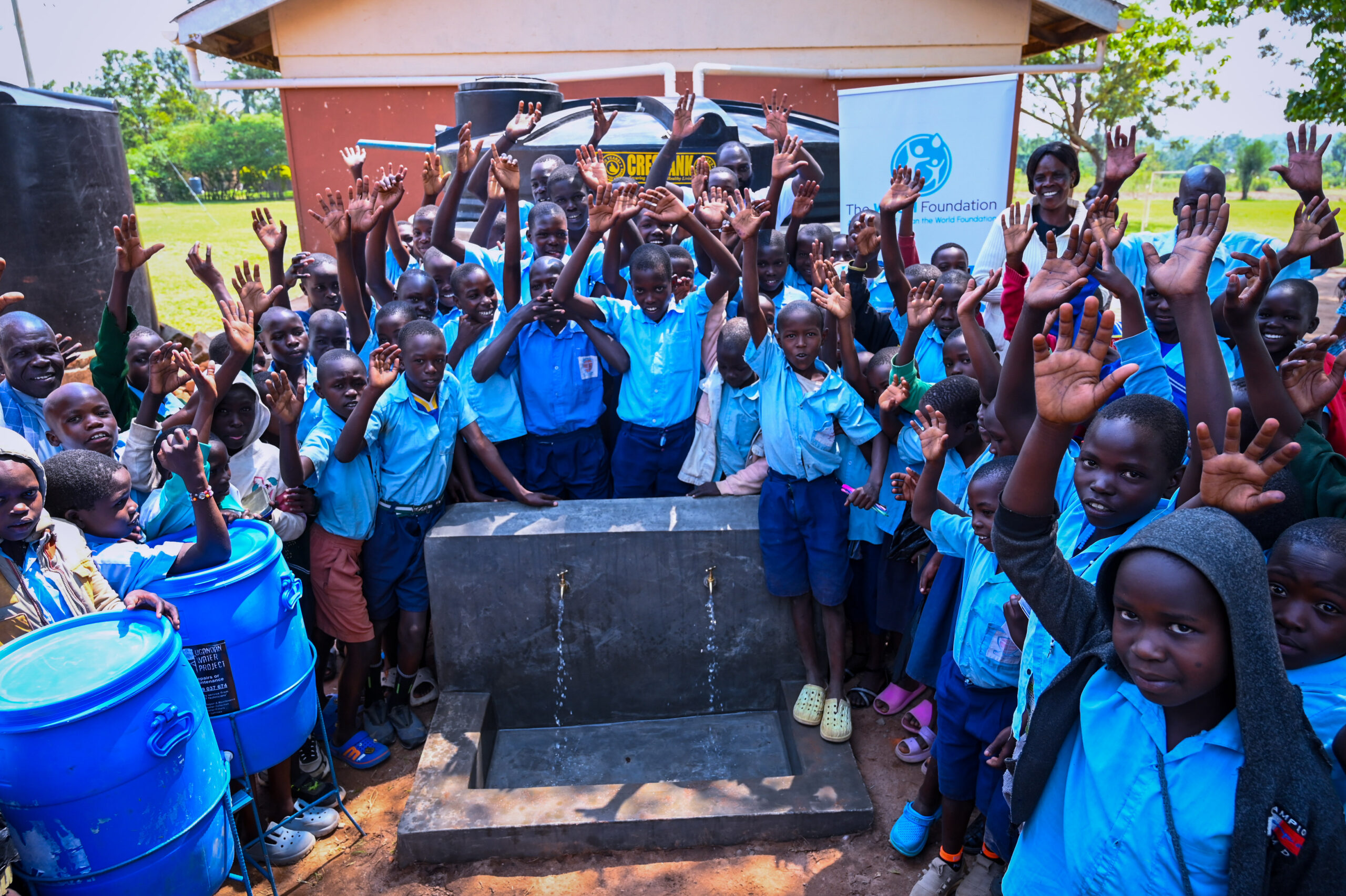
In the district of Tororo, in Eastern Uganda, The WASH Foundation has been implementing a comprehensive community WASH project that includes water access, sanitation infrastructure, and hygiene education across six primary schools.
In February 2026, we completed the water access phase of the project. In partnership with The Ugandan Water Project, we drilled one new water well and installed four rainwater collection systems at the final three schools: Ochegen, Apuwai, and Kalait primary schools.
Here is What That Looks Like in Real Terms:
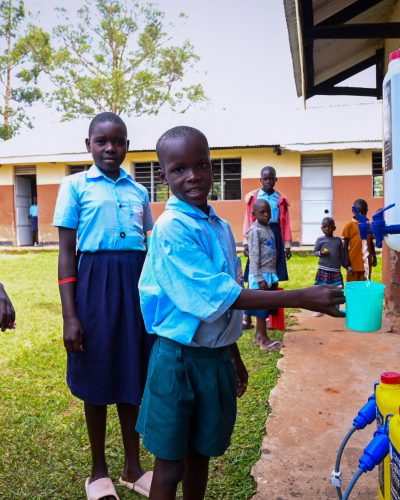
- Ochegen Primary School (1,080 students, 18 teachers) received a new water well and handpump, providing clean water for students, staff, and the surrounding community.
- Apuwai Primary School (710 students, 10 teachers) received two new rainwater collection systems.
- Kalait Primary School (1,538 students, 18 teachers) received two new rainwater collection systems.
Together, these three schools serve 3,328 students, 46 teachers, and approximately 16,000 community members.
Combined with the three schools that received improved water access in February 2025, Magodes, Asinge, and Kwapa primary schools, all six schools in the Tororo project now have a reliable, safe water source on school grounds.
What Has Changed at the Schools with Water Access
The three schools that received wells and rainwater collection systems a year ago are already showing measurable improvement. Mid-line surveys conducted in February 2026 found that:
- Student enrollment has increased. More children are coming to school consistently.
- Grades are improving. Students who are hydrated and healthy learn better.
- Water-related illnesses have decreased. Safe water on-site means fewer stomach infections, skin diseases, and other preventable health conditions.
- Schools have sufficient water to maintain sanitary and hygienic toilet facilities, prepare food safely, and maintain clean environments.
What Comes Next
Water access is just the beginning. The next phase of our Tororo project focuses on the education and training, ensuring that children learn the close connection between improved hygiene habits and good health—creating lasting, sustainable change.
Launching in August 2026, the third phase of the project will include:
- WASH-in-Schools Teacher Training: Equipping educators with the knowledge and tools to teach students about hygiene, handwashing, and sanitation best practices so that good habits are formed early and sustained over time.
- WASH-in-Healthcare Facility Training: Partnering with local healthcare providers to improve water, sanitation, and hygiene practices in health clinics and facilities serving the Tororo community.
- Menstrual Hygiene Management and Social Enterprise Training: Providing girls and women with the education and resources to manage menstrual health safely and with dignity, along with economic empowerment opportunities.
This phase requires approximately $98,000 in funding to cover the WASH education training and program monitoring.
How You Can Help
World Water Day is more than a date on the calendar. It is a reminder that access to clean water is a human right, one that more than a quarter of the world’s women still do not have.
The WASH Foundation’s work in Tororo, Uganda is a real-world example of what happens when communities gain access to clean water: enrollment rises, health improves, and girls have the opportunity to stay in school and build a future.
If you want to be part of this, donate to WASH for All today. Your gift goes directly toward the programs that bring water, sanitation, and hygiene education to the communities that need it most.